Transcription as Resurrection: Plato, Nietzsche and ‘musical truth’
Transcription is a creative act of violence. It dismembers a piece, rearranges its limbs and reanimates it in a new body. To critics this is one of the major sins, the desecration of ‘the original’. ‘The original’ is untouchable and sacred, worshipped for its perceived purity. To transcribe is to pull the original work from its temple and expose it to contamination, to the messy and ‘imperfect’ hands of the interpreter. When Kazuhito Yamashita, for instance, premiered his guitar transcription of Mussorgsky’s Pictures at an Exhibition, the project was met with equal parts awe and disdain. His critics saw it not as an act of genius, but as a crime: a reduction of something vast and glorious into a skeletal version of itself.
This critique of interpretation reveals a paradox: music is to be treated as something to be preserved in its original, untouched form and yet also as something that must be brought into being. Preservation, in its most common sense, freezes a work in time lifelessly, clinically and inert. But art’s true preservation lies in its continued vitality, not as an artefact, but as something that breathes and transforms through each new encounter. We are invited to visit galleries, listen to symphonies and to perform music because it is in the act of engagement that art is made alive. Transcription, as an act of interpretation, is part of that essential process. It is not mummification, but metamorphosis.
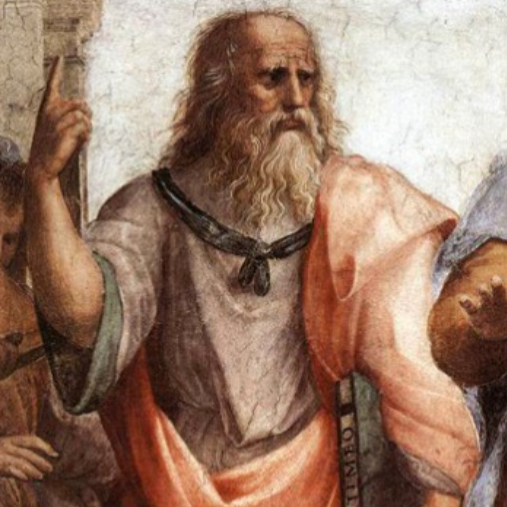
One of the dogmas prevalent in the institution of classical music is that some musicians, so-called ‘true musicians’, have access to, or at the very least pursue the path towards, a kind of ‘ultimate musical truth’ through faithfulness to the score. The idea of the musician as a vessel is part of this trope; the musician should be nothing more than a conduit through which the music flows without interfering with the music’s ability to (re)present the ‘Truth’.
This interference can occur through any form of the musician’s creative addition, including transcription or any other type of interpretational trace. In this manner, the institution of classical music follows Plato’s view on truth, which he sees as consisting in the unchangeable, the eternal and the ideal that is elevated above the contingencies of the given world.
According to this view, the musician’s interference with the score is not an enrichment, but an impoverishment of the original, and a transcription becomes an imposter masquerading as the original. The goal is fidelity, for the critics believe that only through faithfulness to the score and the exact written notes that constitute it can one hope to approach the ‘Truth’ of the composition.
Where the critics use Platonism to dogmatically denounce transcription and interpretation, Nietzsche would see it as a potential act of liberation. In Twilight of the Idols, he writes about Platonists: “They think they’re honouring a thing if they de-historicise it, […] if they make a mummy out of it. Everything that [such] philosophers have handled, for thousands of years now, has been conceptual mummies; nothing real escaped their hands alive. They kill and stuff whatever they worship.”
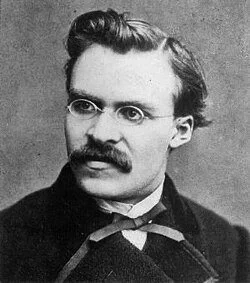
For Nietzsche, the obsession with fidelity to the unchanging original, whether in philosophy or in music, is a form of mummification. Like the process of embalming, it preserves perfectly and intact, but as static and lifeless. In Nietzsche’s eyes, the Platonic ideal is a tomb. To worship the original, to hold it up as an untouchable relic, is to deny the very essence of life: change, growth, becoming. Transcription, then, is not a betrayal, it is an act of vitality. It is not a reduction but a transformation, a resurrection that breathes new life into the work. When an orchestral piece is transcribed for guitar, it does not mimic the original—it imagines the work as alive.
Nietzsche’s view dismantles not only the sacralisation of the original score but also the intent of the composer. The Romantic era saw the rise of the ‘cult of genius’ which sought to enshrine the composer as a vessel of divine inspiration. Figures such as Bach or Beethoven were not seen as musicians or composers, but ‘prophets’ whose scores were regarded as sacred texts.
The task of the performer was to serve the text, to bring it to life as faithfully as possible, without alteration or deviation. Somewhere along the way this fidelity became fetishised and the pursuit of authenticity turned into a rigid adherence to historical performance practices. The original became a relic, a “conceptual mummy”, untouchable and inert.
To transcribe is to defy the pursuit of static truth and align oneself with the celebration of life. By transcribing an orchestral piece for guitar, the transcriber does not copy; they create again and again, (re)imagining, (re)shaping and (re)creating the work. In this act of resurrection of the work’s essence, transcription compels both the performer and the listener to engage dynamically with the music, an engagement that is, in fact, inherent to any auditory experience of music. Music, by its nature, can only be encountered through the senses and their contingencies, which in itself marks a departure from the Platonic ideal of unchanging truth. As subjective processes, interpretation and apprehension involve contingent choices that inevitably (trans)form the music, and it is this dynamic interaction with the piece that brings it into being.

Thus, to attend a concert by Yamashita and appreciate his live performance of works originally written for guitar, whilst simultaneously condemning his transcriptions of orchestral pieces, reveals a form of intellectual inconsistency. This stance assumes that an interpretation which seeks to replicate the original score with strict fidelity is closer to the so-called truth of the work than an interpretation that intentionally diverges from it. Such a view rests on the flawed assumption that the Platonic model of unchanging truth can be applied in any meaningful way to music, an entity whose entire existence relies on flux. In reality music is never a perfect replication of an ideal. Every performance is always already interpretation.
In this sense, critics do not privilege the original over an interpretation, but rather one interpretation over another. In doing so, they fail to recognise that both the ‘faithful reproduction’ of a work and any transcription of it are equally valid and equally sacrilegious artistic acts. The question musicians must ask themselves shifts from fidelity to vitality: not how closely can we replicate the past, but how vividly can we bring it to life?